
Publishing Scholarly Archaeology since 1997
Publishing Scholarly Archaeology since 1997
Log in | My Account | Basket Twitter Facebook LinkedIn
Advanced Search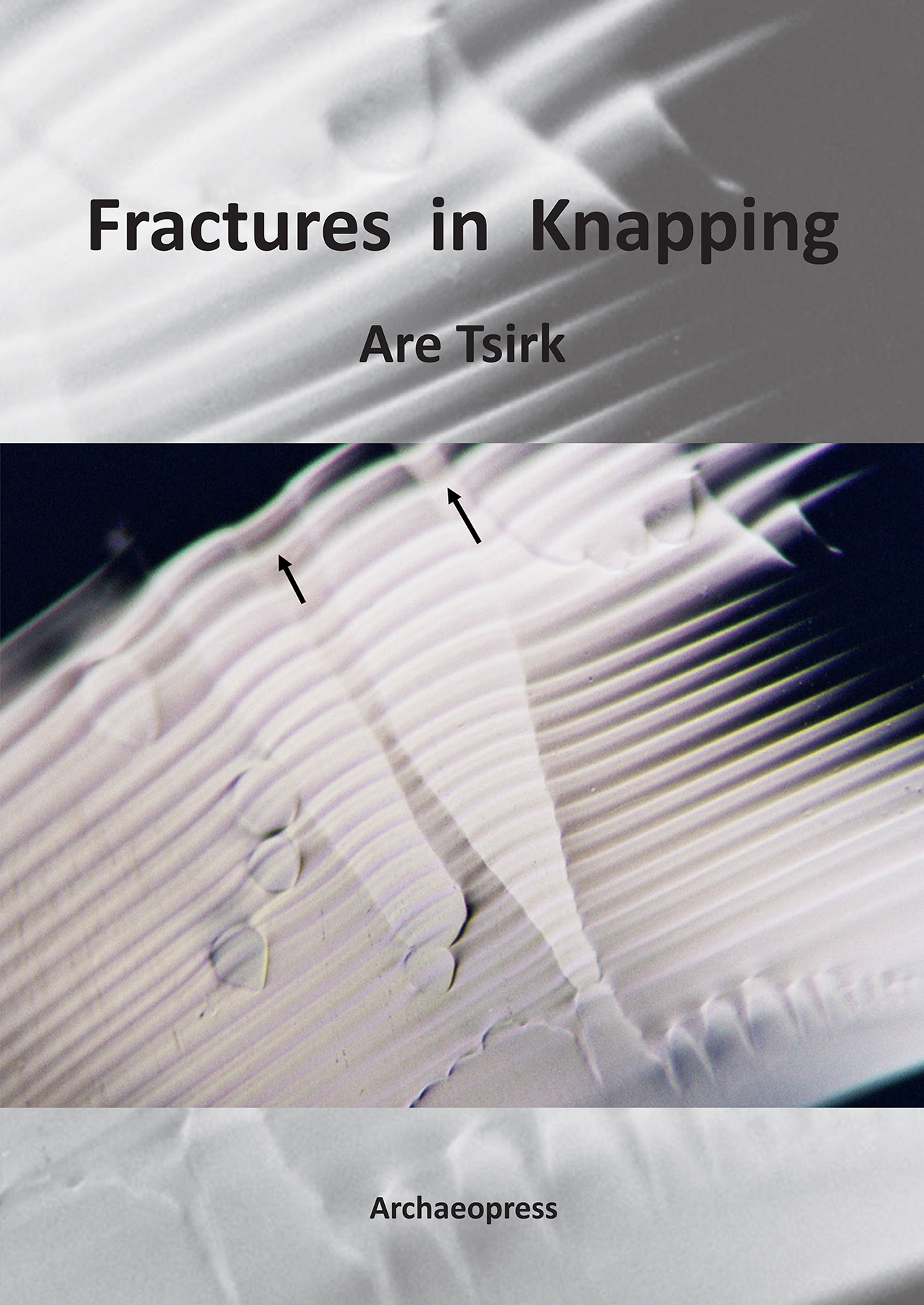
Download Sample PDF
H 245 x W 174 mm
276 pages
Illustrated throughout in black & white
Published Nov 2014
ISBN
Paperback: 9781784910228
Digital: 9781784910235
Fractures in Knapping
By Are Tsirk

Paperback
£25.00
Includes PDF
PDF eBook
(personal use)
£16.00
PDF eBook
(institutional use)
£25.00
 Add to wishlist
This book is for students and practitioners of not only knapping, lithic technology and archaeology, but also of fractography and fracture mechanics. In general, understanding of fractures provides a sounder basis for lithic analysis, and use of more recent scientific tools opens new avenues for lithic studies.
Contents
PART I: ELEMENTS OF KNAPPING 1.Knapping Past and Present Introduction Traditional Crafts and Industrial Society Prehistoric Knapping Recent and Remnant Knapping Traditions Some Specialized Knapping Traditions Gunflints Threshing Sledges Ceramic Industry Modern Knapping and Recent Explosion Of Interest Knapping Studies Archaeological Record Ethnography Knapping Experiments Living Archaeology Mechanics, Fracture Mechanics and Fractography Contemporary Crafts 2.Knapping Tools and Techniques Antler and Wood Billets Hammerstones Punches Pressure Flakers Holding and Fabricating Devices Anvils and Supports Hides Grinding and Abrading Stones Nontraditional Tools and Acessories Use-Wear Indicators Direct Percussion Anvil Technique and Anvil Percussion Bipolar Percussion Indirect Percussion Pressure Flaking Pecking, Grinding, Polishing Edge and Platform Preparation Some Rules of Thumb Knappers' Wisdom, Folklore and Dilemmas Softer Percussors and Slower Blows Follow-Through with Forces Ridge Abrasion Wetting and Soaking Learning to Knap 3.Raw Materials Material Selection and Use Obsidian Flint and Chert Other Materials Physical and Mechanical Properties Microstructure and Physical Properties Homogeneity and Isotropy Elasticity, Ductility, Brittleness Elastic Constants Constants for Thermal Effects Strength and Fracture Toughness Mirror Constants Workability Alteration of Properties And Behavior Hydration and Vesiculation of Obsidian Cortex and Patina on Flint and Chert Thermal Cracking Thermal Alteration and Heat Treatment Environmental Effects Procurement Nontraditional Uses of Obsidian, Flint and Chert PART II - FRACTURE MARKINGS: THE TOOLS OF FRACTOGRAPHY 4.An Overview 5. Hackles and Hackle Scars Twist Hackles and Single Tails Multiple Tails Parabolic Double Tails Hackle Scars Hackle Scar and Hackle Flake Bulbar Scar and Proximal Scar Ripple Scars Ridge Scars More on Hackle Scar Formation 6.Ripples Ripples Wallner Lines Normal Wallner Lines Anomalous Wallner Lines Stress Changes Causing Ripples Static Effects Specimen Vibration Stress Pulses Experimental Ripples Ultrasonic Modulation Sonic Modulation Exploding Wire Experiments Terminology and Interpretations by Others 7. Mirror, Mist, Hackle, Branching Mirror Mist and Velocity Hackle Branching, Incipient Branching and Lateral Wedges Velocity and Energy Considerations Mirror Constants and Stresses Markings Related to Mist and Hackle Wallner Mist-Hackle Configuration Mist Suppression Configurations Mist Lines 8.Miscellaneous Markings Material Interface Markings Material Interface Ridges and Ripples Material Interface Hackle Material Transition Ridge Split Marks Dividing Lines Ruffles Liquid-Induced Fracture Markings (Lifms) Effects of Moisture and Liquids Conditions for Manifestation of LIFMs Occurrence of LIFMs Significance of LIFMs Basic Kinds of LIFMs A Catalogue of LIFMs and Patterns Observation of LIFMs Variability with Liquids Variability with Lithic Materials LIFMs with Sonic Modulation LIFMs Observed with Condensation Some Surface Patterns PART III - FRACTURES IN KNAPPING 9.Introduction Elements of a Mechanical System And Knapping Stresses, Stress Waves and Vibrations Some Fundamentals in Fracture Mechanics Catastrophic and Subcritical Crack Growth Research on Fractures in Knapping Other Research 10.Flake Initiations, Proximal and Surface Features Flake Initiations Some Definitions Hertzian Cone Fractures Contact Initiations Non-Contact Initiations Initiations with Multiple Blows Effects of Cortex and "Layering" Environmental Effects Percussor Softness and Speed Proximal Flake Features Platform Characteristics Dorsal Ridges and Curvatures Interior Platform Edge Wing Flakes Bulbs Popouts and Stepouts Flake Surface Features Fracture Directions Ripple Configurations and Fracture Fronts Ripple Concavity Ripples Related to Flake and Core Geometry Ripples at Inhomogeneities Why Ridges Guide Flakes Fracture Velocities Mist and Related Markings Hackle Scars Ruffles Split Marks

Archaeopress Publishing Ltd
First and Second Floor
13-14 Market Square
Bicester
Oxfordshire OX26 6AD
United Kingdom
Tel +44 (0) 1865 311914 | fax +44 (0) 1865 512231 | email info@archaeopress.com
