
Publishing Scholarly Archaeology since 1997
Publishing Scholarly Archaeology since 1997
Log in | My Account | Basket Twitter Facebook LinkedIn
Advanced Search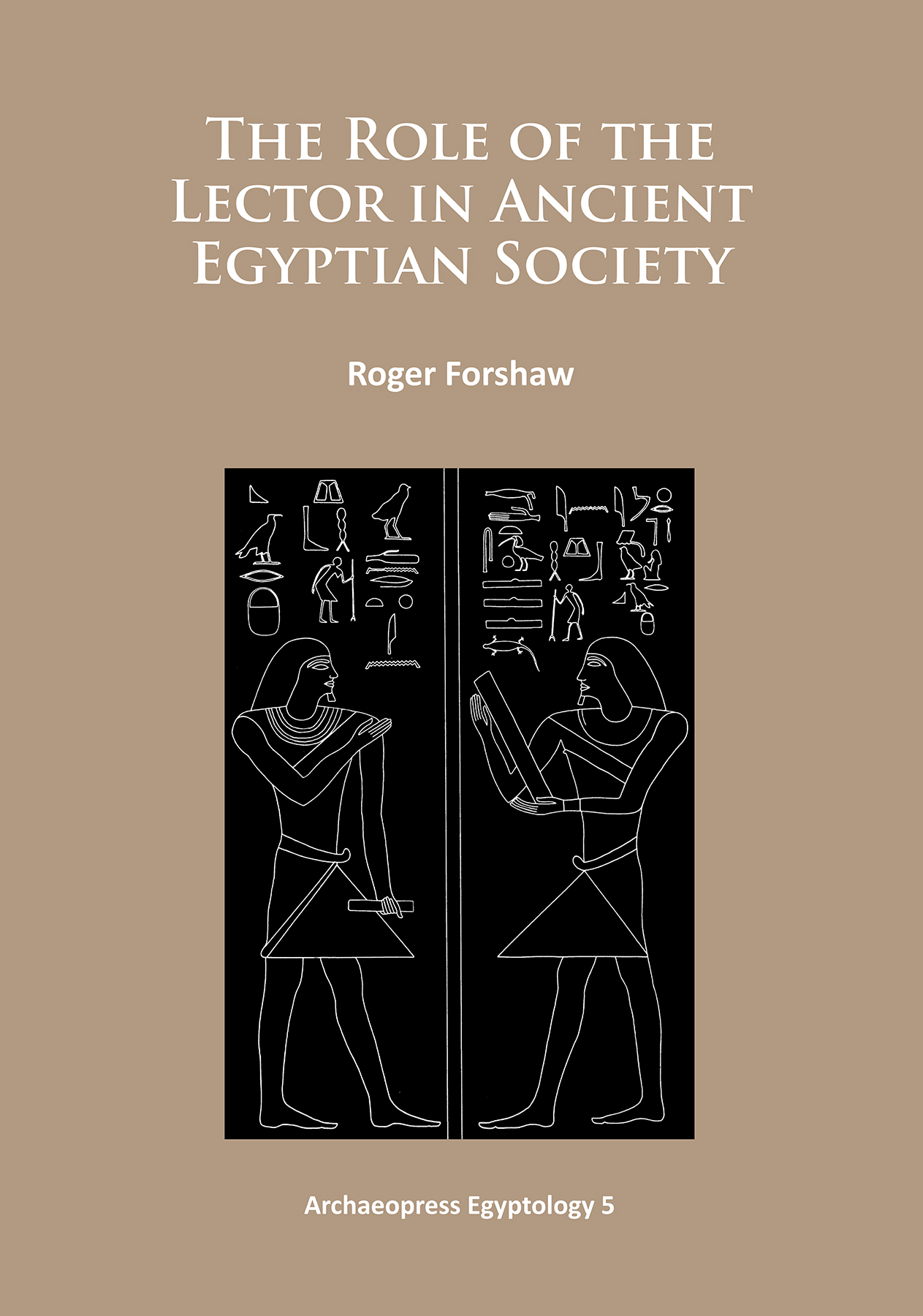
Download Sample PDF
H 297 x W 210 mm
176 pages
Illustrated throughout in black & white
Published Nov 2014
ISBN
Paperback: 9781784910327
Digital: 9781784910334
The Role of the Lector in Ancient Egyptian Society

Paperback
£31.00 £20.15
Includes PDF
PDF eBook
(personal use)
£16.00
PDF eBook
(institutional use)
£31.00
 Add to wishlist
The lector is first attested during the 2nd Dynasty and is subsequently recognised throughout ancient Egypt history. This study challenges previous approaches to studies on the Lector and explores his diverse functions in a wide ranging review of the relevant evidence.
Contents
List of Figures
List of Tables
Abbreviations
Acknowledgements
Introduction
Chapter 1: Recognition, Origin and Hieroglyphic Representation
Chapter 2: Magic and Performance
Chapter 3: Equipment of the Lector
Chapter 4: Remuneration
Chapter 5: Temple and Festival Ritual
Chapter 6: Royal Involvement
Chapter 7: Funerary Ritual and Provisioning the Dead
Chapter 8: The Opening of the Mouth Ceremony
Chapter 9: The Involvement of the Lector in Healing
Chapter 10: The Title of Lector Recorded in Expedition Inscriptions
Chapter 11: The Lector and the Law
Chapter 12: Literary Evidence
Summary and Conclusions
Appendix 1: The objects comprising the burial assemblage of Tomb No.5 at the Ramesseum
Appendix 2: The papyri from the burial assemblage of Tomb No.5 at the Ramesseum
Appendix 3: List of the books inscribed on the walls of the ‘House of Books’ (pr-mDAt) at Edfu Temple
Appendix 4: Occurrences of a lector performing rituals during water crossings
Appendix 5: Episodes in the Opening of the Mouth Ritual in which it is possible to identify the presence of the lector
Appendix 6: Presence of the episodes of the Opening of the Mouth ceremony in the seven major sources
Appendix 7: : Lectors who additionally carried the title of physician
Appendix 8: Lectors present on mining expeditions
Appendix 9: Papyrus BM 10054
Bibliography
About the Author
Dr Roger Forshaw is an Honorary Research Associate at the KNH Centre for Biomedical Egyptology, University of Manchester.Reviews
'The term ‘lector’ is a familiar one to any student of Egyptology, frequently coupled with the word ‘priest’. A lector priest would be expected to have had an important role in Egyptian religion, performing essential rituals and reciting the appropriate words to accompany them. This new, scholarly study by Roger Forshaw demonstrates that the lector had a far wider role than a purely priestly one... This comprehensive work should furnish even the most demanding researcher with as much useful information as he or she could wish.' - Ancient Egypt Magazine, July 2015

Archaeopress Publishing Ltd
First and Second Floor
13-14 Market Square
Bicester
Oxfordshire OX26 6AD
United Kingdom
Tel +44 (0) 1865 311914 | fax +44 (0) 1865 512231 | email info@archaeopress.com
