
Publishing Scholarly Archaeology since 1997
Publishing Scholarly Archaeology since 1997
Log in | My Account | Basket Twitter Facebook LinkedIn
Advanced Search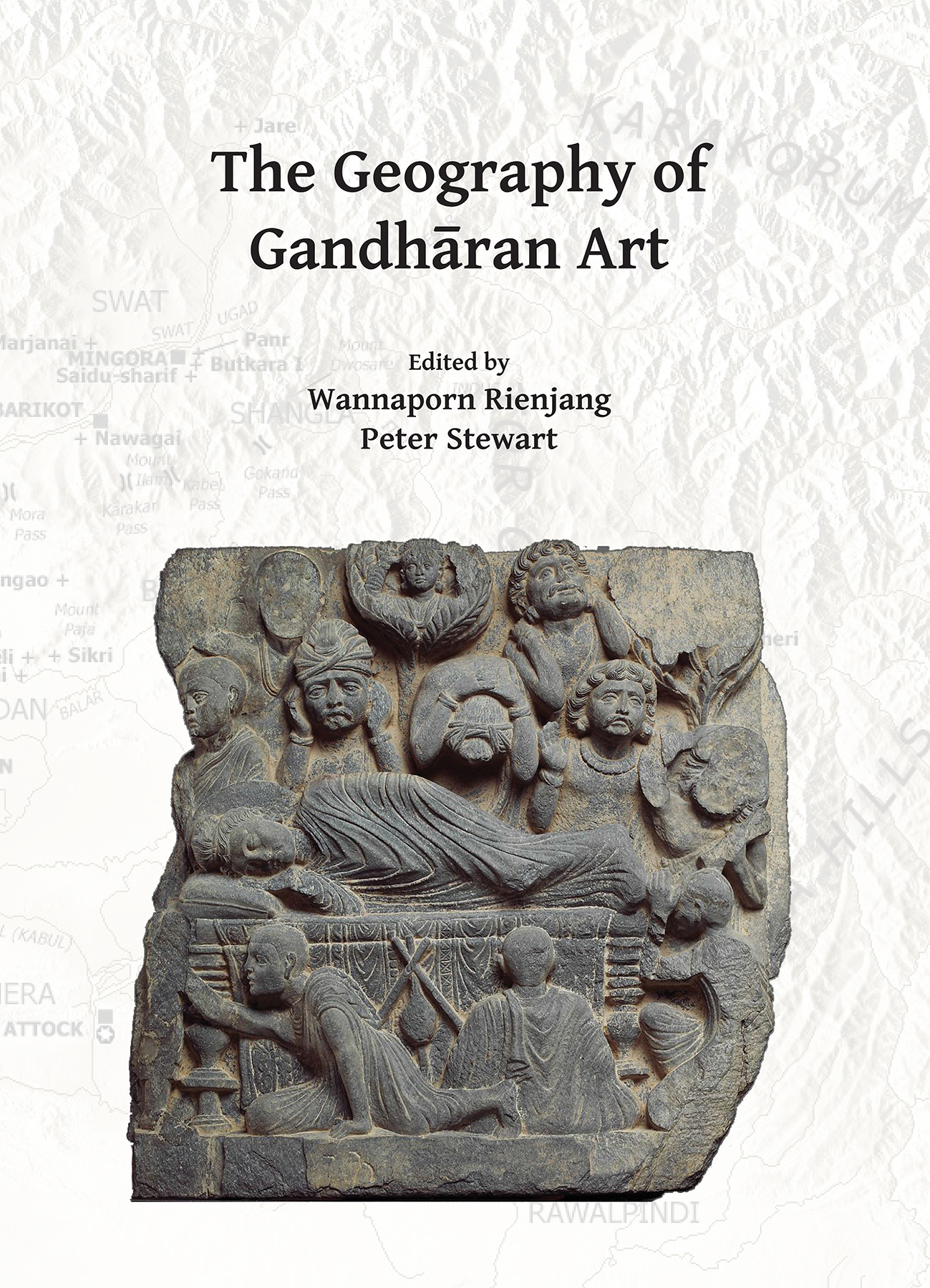
Download Sample PDF
H 276 x W 203 mm
200 pages
Illustrated throughout in colour and black & white (60 plates in colour)
Published Mar 2019
ISBN
Paperback: 9781789691863
Digital: 9781789691870
Keywords
Gandhara; Pakistan; South Asia; Art; Graeco-Roman influence
The Geography of Gandharan Art
Proceedings of the Second International Workshop of the Gandhara Connections Project, University of Oxford, 22nd-23rd March, 2018
Edited by Wannaporn Rienjang, Peter Stewart

 Add to wishlist
This second volume of the Gandhara Connections project at Oxford University’s Classical Art Research Centre aims to pick apart the regional geography of Gandharan art, presenting new discoveries at particular sites, textual evidence, and the challenges and opportunities of exploring Gandhara’s artistic geography.
Contents
Editors’ note ;
Preface – by Wannaporn Rienjang and Peter Stewart ;
Part 1 Artistic Geographies ;
Gandharan art(s): Methodologies and preliminary results of a stylistic analysis – by Jessie Pons ;
Geographical differences and similarities in Gandharan sculptures – by Satoshi Naiki ;
Part 2 Provenances and Localities ;
Sources of acquisition for the Gandharan Buddhist sculptures in the former S.R.O. collection of the Department of Archaeology and Museums, Government of Pakistan, in the light of ar¬chival documents – by Zarawar Khan ;
Fresh discoveries at the Buddhist Monastic Complex Badalpur, Taxila valley – by Muhammad Ashraf Khan ;
Fresh research on the Buddhist monastic complex of Takht-i-Bahi – by M.H. Khan Khattak ;
The scope of the Buddhist 'workshops' and artistic 'centres’ in the Swat Valley, ancient U??iyana, in Pakistan – by Abdul Ghafoor Lone ;
Regional workshops and small stupas in the Swat Valley: an analysis of the evidence from Gumbat, Saidu Sharif, and Pan? – by Pia Brancaccio and Luca Maria Olivieri ;
Differences and similarities in Gandharan art production: the case of the modelling school of Ha??a (Afghanistan) – by Alexandra Vanleene ;
Part 3 Geography and Text ;
A survey of place-names in Gandhari inscriptions and a new oil lamp from Malakand – by Stefan Baums ;
Making places for Buddhism in Gandhara: stories of previous births in image and text – by Jason Neelis
About the Author
Wannaporn Rienjang is Lecturer in Archaeology, Museum and Heritage Studies at the Faculty of Sociology and Anthropology, Thammasat University and a project consultant for the Gandhara Connections project at the Classical Art Research Centre, Oxford. She completed her doctoral degree in Archaeology at the University of Cambridge in 2017, and has been involved in research projects focusing on the art and archaeology of Greater Gandhara, Indian Ocean Trade and ancient working technologies of stone beads and vessels. ;Peter Stewart is Director of the Classical Art Research Centre and Professor of Ancient Art at the University of Oxford. He has worked widely in the fields of Graeco-Roman sculpture and ancient world art. His publications include Statues in Roman Society: Representation and Response (2003), The Social History of Roman Art (2008), and A Catalogue of the Sculpture Collection at Wilton House (2020).
Archaeopress Publishing Ltd
First and Second Floor
13-14 Market Square
Bicester
Oxfordshire OX26 6AD
United Kingdom
Tel +44 (0) 1865 311914 | fax +44 (0) 1865 512231 | email info@archaeopress.com
