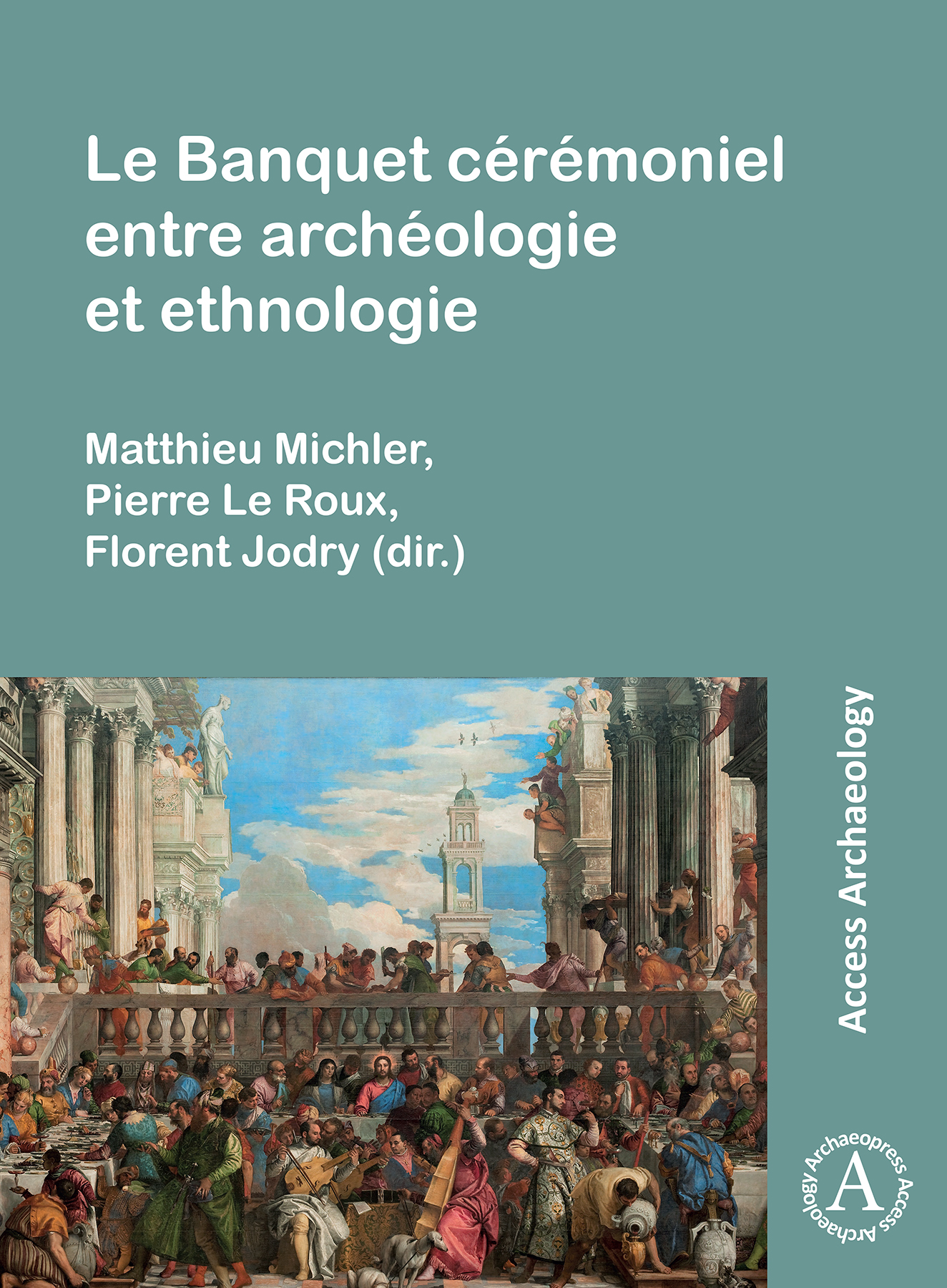
While the practice of the banquet or ceremonial feast has been recognized in many societies around the world, living, ancient or extinct, it had not yet been the subject of a large-scale synthesis. This book offers an interdisciplinary study of the festive banquet in relation to the cosmogonies and social practices of the social spaces concerned.
A dual approach, combining social anthropology and archaeology, reveals the banquet or ceremonial feast as a fully social phenomenon. In extraordinary circumstances, banquets - usually held in stratified societies with a sacrificial religion - bring together large numbers of guests, who are fed and watered on rare and expensive foods in large quantities, in order to honor someone or something, and to ostentatiously assert the power of the organizers. While this practice has been recognized in many societies around the world, living, ancient or extinct, it had not yet been the subject of a large-scale synthesis. It was therefore appropriate to take an interdisciplinary look at the ins and outs of the festive banquet in relation to the cosmogonies and social practices of the social spaces concerned. The nine essays collected here, from papers given at study days held in Strasbourg, contribute to the debate on important questions relating to the banquet, such as its temporality (cultural cycles or cosmogonic myths), its location (public or private sphere, open-air or indoors), commensality, hospitality, the type of products consumed and table manners, and finally the hypothesis that the organization of a banquet implies the existence of a hierarchical, sedentary society, with wealth (or chrematism), if not ostentation. The diversity of geo-cultural areas, chronological periods and case histories covered enable us to apprehend the banquet in all its multiple aspects, offering new food for thought and avenues for research.
En français
Une double approche, associant les points de vue de l???anthropologie sociale et de l???arch??ologie, permet de r??v??ler le banquet ou festin c??r??moniel comme ph??nom??ne social total. En effet, en des occurrences extraordinaires, il rassemble, le plus souvent dans des soci??t??s stratifi??es ?? religion sacrificielle, de nombreux convives abreuv??s et nourris de mets rares et on??reux en grandes quantit??s afin d???honorer quelqu???un ou quelque chose et pour affirmer avec ostentation la puissance des organisateurs. Si cette pratique a ??t?? reconnue dans de nombreuses soci??t??s du monde entier, vivantes, anciennes ou disparues, elle n???avait pas encore fait l???objet d???une synth??se d???envergure. Il convenait donc de s???interroger de fa??on interdisciplinaire sur les tenants et aboutissants du banquet festif en rapport aux cosmogonies et pratiques sociales des espaces sociaux concern??s. Les neuf essais rassembl??s ici, issus des communications donn??es aux journ??es d?????tude tenues ?? Strasbourg, contribuent ?? alimenter le d??bat concernant des questions d???importance relatives au banquet comme sa temporalit?? (cycles des cultures ou mythes cosmogoniques), sa localisation (sph??re publique ou priv??e, plein-air ou int??rieur), la commensalit??, l???hospitalit??, le genre de produits consomm??s et les mani??res de table, posant enfin l???hypoth??se que l???organisation d???un banquet implique l???existence d???une soci??t?? hi??rarchis??e, s??dentaire, ?? richesse (ou chr??matique), sinon ostentatoire. La diversit?? des aires g??oculturelles, des p??riodes chronologiques et des cas trait??s permet d???appr??hender le banquet sous ses multiples aspects en proposant de nouvelles r??flexions et pistes de recherche.



 Add to wishlist