
Publishing Scholarly Archaeology since 1997
Publishing Scholarly Archaeology since 1997
Log in | My Account | Basket Twitter Facebook LinkedIn
Advanced Search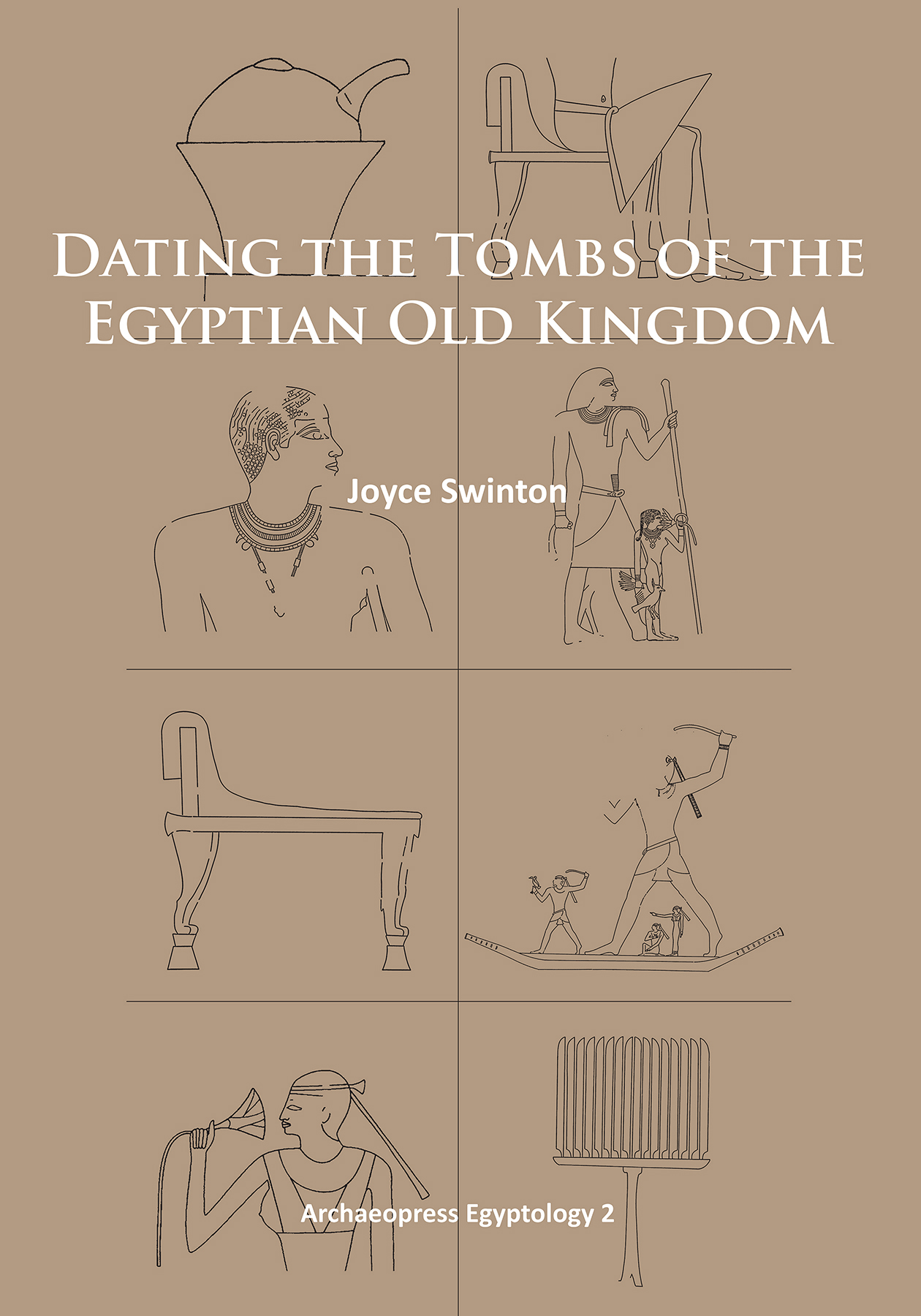
Download Sample PDF
H 297 x W 210 mm
204 pages
Illustrated throughout in black and white
Published Jun 2014
ISBN
Paperback: 9781905739820
Digital: 9781905739882
Dating the Tombs of the Egyptian Old Kingdom

Paperback
£34.00 £22.10
Includes PDF
PDF eBook
(personal use)
£16.00
PDF eBook
(institutional use)
£34.00
 Add to wishlist
The decorated tombs of the Egyptian Old Kingdom offer detailed knowledge of a society that in all probability was the first nation state in history. The system of dating these monuments presented here builds on the work of previous scholars. In this volume the author explains how the dating method was devised.
Contents
Acknowledgements
Tables of Contents
Preface
Chapter 1: Introduction
The need to date private tombs
The proposed dating system
Defining the end of the Old Kingdom and the First Intermediate Period
Methodology used in this study: establishing dating criteria
Stages in the development of the dating system
The dating of provincial tombs
Chapter 2: Prosopography for Tomb Groups A and B
Data from Giza
Data from Saqqara
Data from tombs of Upper Egypt
The use of personal relationships
Dating for the prosopography
Prosopography (Groups A and B)
Group A and B officials
Chapter 3: Establishing Dating Criteria
Dress of the male tomb owner (CRITERIA 1–8)
Adornment of the tomb owner (CRITERIA 9–12)
The ‘animal skin’ garment (CRITERIA 13–24)
Tomb owner at the offering table (CRITERIA 25–30)
Bread and reeds on offering table (CRITERIA 31–38)
Lists and offerings associated with table (CRITERIA 39–50)
Priestly figures performing rites (CRITERIA 51–59)
The offering table (CRITERIA 60–63)
The female figure (CRITERIA 64–72)
The banquet scene (CRITERIA 73–78)
Stools and chairs (CRITERIA 79 – 93)
Marsh scenes (CRITERIA 94–104)
Figures and description of Criteria 1-104
Tables to establish dating criteria
Chapter 4: Testing the Criteria
Giza Tombs
Saqqara Tombs
Provincial Tombs
Testing the Criteria: Charts A to G-G
Chapter 5: Concluding Comments
The validity of the criteria
Reliability of the system
Question of archaising tombs
Need for more criteria
A time lag between cemeteries?
Abbreviations and Bibliography
Archaeopress Publishing Ltd
First and Second Floor
13-14 Market Square
Bicester
Oxfordshire OX26 6AD
United Kingdom
Tel +44 (0) 1865 311914 | fax +44 (0) 1865 512231 | email info@archaeopress.com
